Plenary Talks
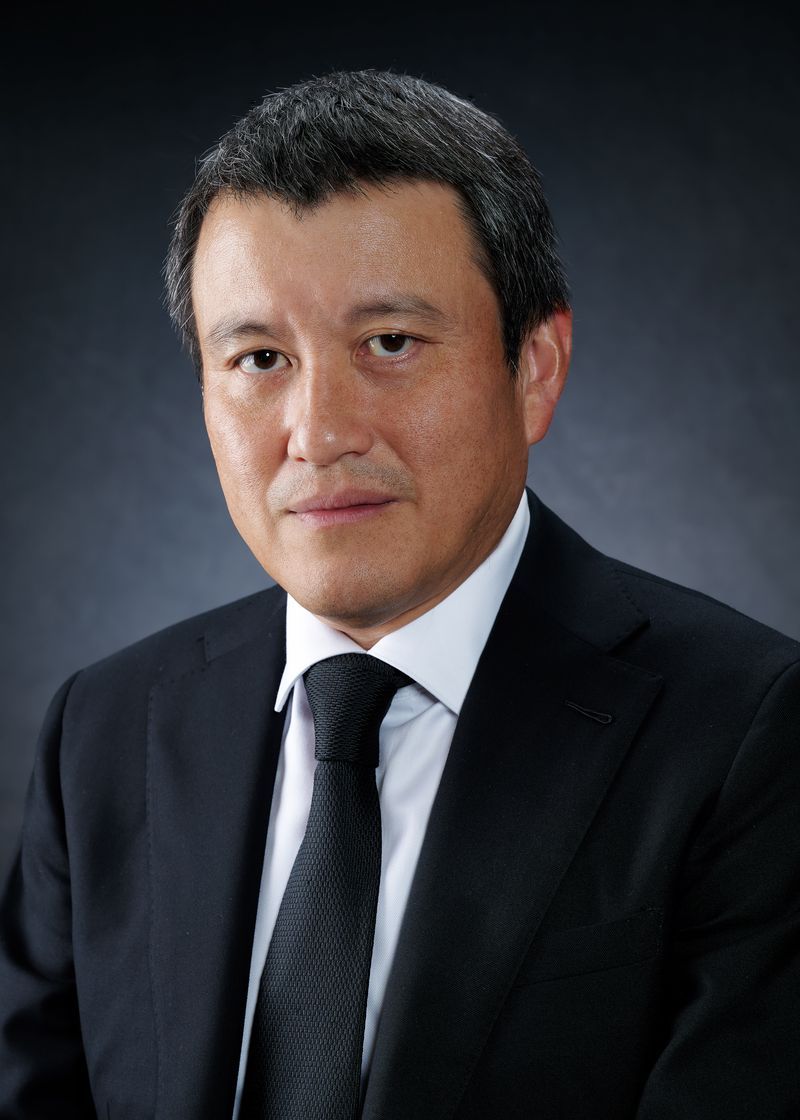
Prof. Shanhui Fan
Title: Exploiting modal structures from light manipulations
Much of the capabilities of light manipulations in photonic systems arise from the exploitation of the modal structures of these systems. In this talk we will present a few examples. We show that the distributions of the modes in the wavevector space can be used to create space-time wave packets that can propagates in free space without diffraction and dispersion. We construct time-modulated structures where modes at different frequencies can couple together to achieve non-Abelian lattice gauge fields. We also program the transform of spatial modes in waveguide mesh to perform computations that are important for quantum information processing.
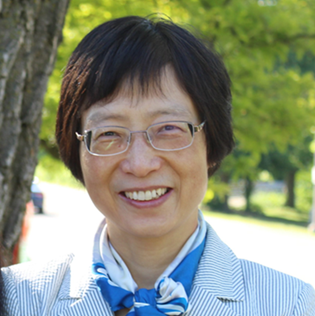
Prof. Xiaoyi Bao
Title: Integrating Distributed Fiber Sensing and Structured Fiber Sensors: Toward Ultrasensitive and dynamic monitoring systems
Fiber optic sensing is transforming how we monitor the world—from bridges and pipelines to aircraft and energy grids. Distributed fiber sensing can measure strain, temperature, and vibration continuously over 100 kilometers, providing a “nervous system” for large structures. At the same time, structured fiber sensors, such as nanofiber interferometers, deliver ultra-sensitive detection at critical points. This talk explores how combining these two approaches creates a powerful sensing network that offers both global coverage and pinpoint accuracy. I will share recent breakthroughs in distributed sensing using Brillouin and Rayleigh scattering, and innovations in structured fibers that boost sensitivity and nanoparticle detection. We will look at the physics behind these technologies and their applications in smart infrastructure, aerospace, pipelines and even emerging quantum sensing—bridging fundamental science with practical solutions for a safer and smarter future.
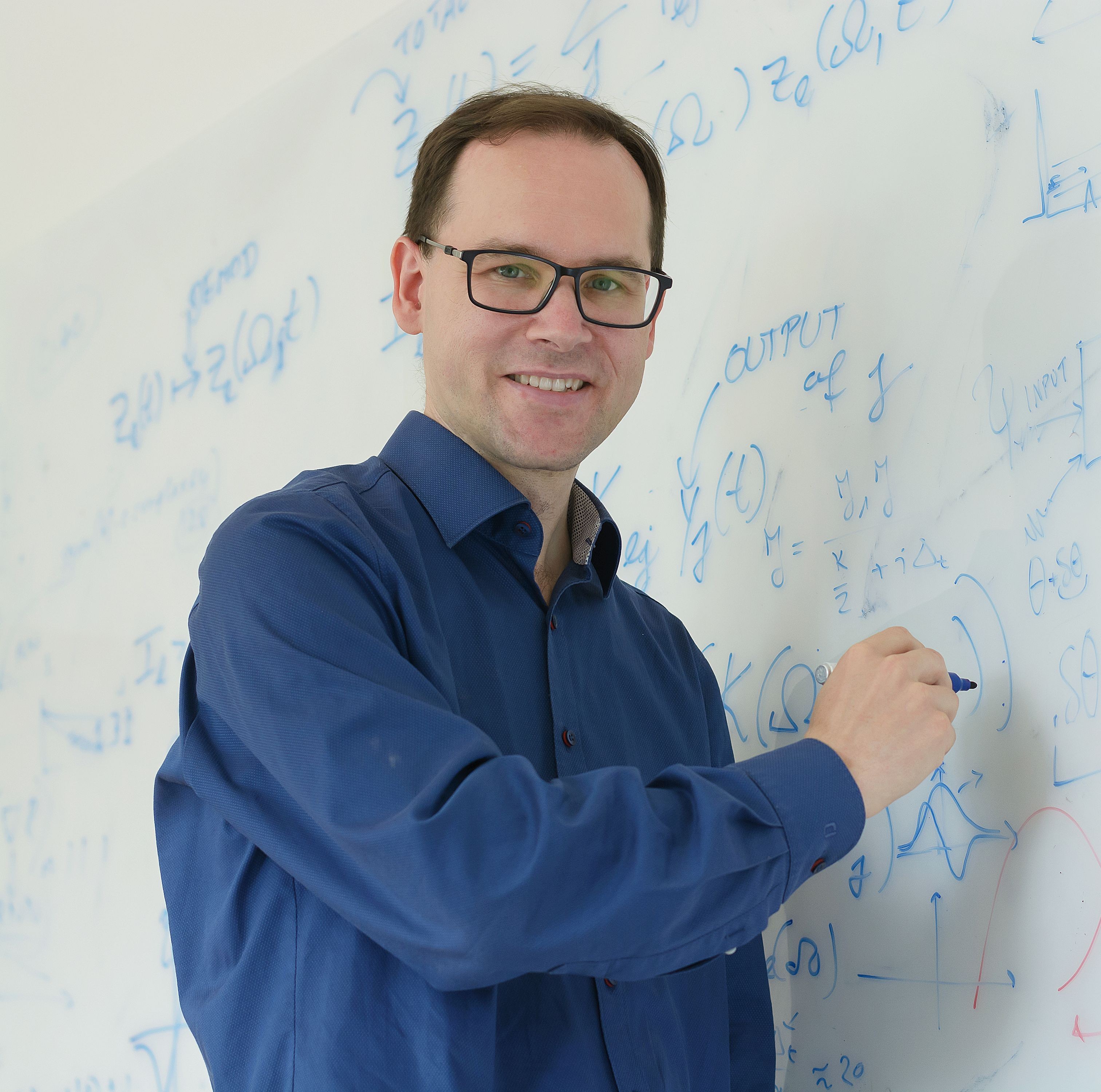
Prof. Florian Marquardt
Title: Making physical machines learn
The ongoing revolution in artificial intelligence requires ever-increasing resources for training and deploying artificial neural networks. This exponentially accelerating trend has been recognized as unsustainable, and a community of scientists and engineers are exploring energy-efficient alternatives to the current paradigm of digital artificial neural networks. By designing devices that operate much closer to the microscopic laws of physics but offer similar functionalities, one can achieve significant gains in efficiency and speed. In this talk, I will give an overview of the different approaches. Above all, I will concentrate on the topic of physics-based learning, where the idea is to extract the correct updates to trainable parameters in an efficient manner, based on intelligently chosen experimental procedures. I will illustrate the opportunities in this domain by a few of our recent ideas. These include learning with the help of time-reversal operations, nonlinear processing based on linear optical scattering, and a new general training technique based on scattering experiments.